Wednesday, January 25, 2012

The Conversion of St. Paul - Ecumenical Service at Dormition of the Virgin Church - Frs. Ernest Tyler & Lawrence Abello, S.J.

Giovanni Bellini, Conversion of/de St. Paul (1472)


FEAST – THE CONVERSION OF ST. PAUL THE APOSTLE

O God, who taught the whole world through the preaching of the blessed Apostle Paul, draw us, we pray, nearer to you through the example of him whose conversion we celebrate today, and so make us witnesses to your truth in the world. Through our Lord Jesus Christ, your Son, who lives and reigns with you in the unity of the Holy Spirit, one God, for ever and ever.


* * * * * *


AN OTTAWA OBSERVANCE
IN THE WEEK OF PRAYER
FOR CHRISTIAN UNITY


On Sunday evening, a goodly throng of English-speaking and francophone Christians gathered at the Dormition of the Virgin Greek Orthodox Church for prayer and reflection on Christ's call to be one (John 17.21). 

Afterwards there was a wonderful catered reception in the Hellenic Centre next door where fellowship was extended. 

Some photos:


* * * * * *

JESUITS IN ENGLISH CANADA PROVINCE
LOSES THREE MEMBERS IN 24 HOURS


In a 24-hour period last Saturday, three members associated with the Jesuits in English Canada Province passed away.  On the morning of January 21, Father William Addley, 68, pastor of Our Lady of Lourdes Parish, Toronto (mentioned on this blog on Sunday), later that day in the Jesuit Infirmary in Pickering, Father Ernest Tyler, 94, engaged for many years in secondary education and then pastoral ministry, and then in the early hours of January 22 in Calcutta, Father Lawrence Abello, 80, scientist and pro-life advocate.

Below a few remarks on Fathers Tyler and Father Abello, who are commended to your prayers:

FATHER ERNEST TYLER, S.J.


April 28, 1917 - January 21, 2012

This morning at 10:30, a funeral Mass will be celebrated in St. Ignatius Chapel of Manresa Spiritual Renewal Centre, Pickering, for Father Ernest C. Tyler who passed away at Rene Goupil House, Pickering on January 21, 2012, in the 94th year of his life and in the 73rd year of his religious life.

Born in Montreal, Quebec, on the April 28, 1917, he attended both Loyola High School and College and obtained a B.A. before entering the Society of Jesus on October 2, 1939 at Guelph, Ontario. He was ordained in Toronto on June 24, 1951.

After completing his studies for the priesthood, Father Tyler did a year of spirituality (Jesuit tertianship) at Xavier Hall in Pass Christian, Mississippi, USA then studied for a degree in education at the University of Toronto. In his ministry, he taught French and religion and served as an educational administrator (academic and discipline) at St. Mary’s University High School, Halifax; Loyola College High School, Montreal; St. Paul’s High School, Winnipeg; and Brebeuf College School, Toronto.

In 1969, Father began a new career in parish ministry at Our Lady of Lourdes Parish in Toronto, where he helped many people over the next fourteen years; in 1983, he moved to Waubaushene, Ontario to be pastor of St. John the Evangelist parish until 1987 when he moved to Blessed Sacrament Parish as assistant and was Chaplain at Sunnybrook Medical Centre. In 1997 to 2004, he was parish administrator for St. Eugene’s Chapel, a mission church of Blessed Sacrament Parish.

Father "Ernie", as he was called by his fellow Jesuits, loved to play golf and was always interested in the comings-and-goings of his fellow Jesuits; he retired to the Jesuit Infirmary in 2005 where he stayed until his death.


* * * * * *


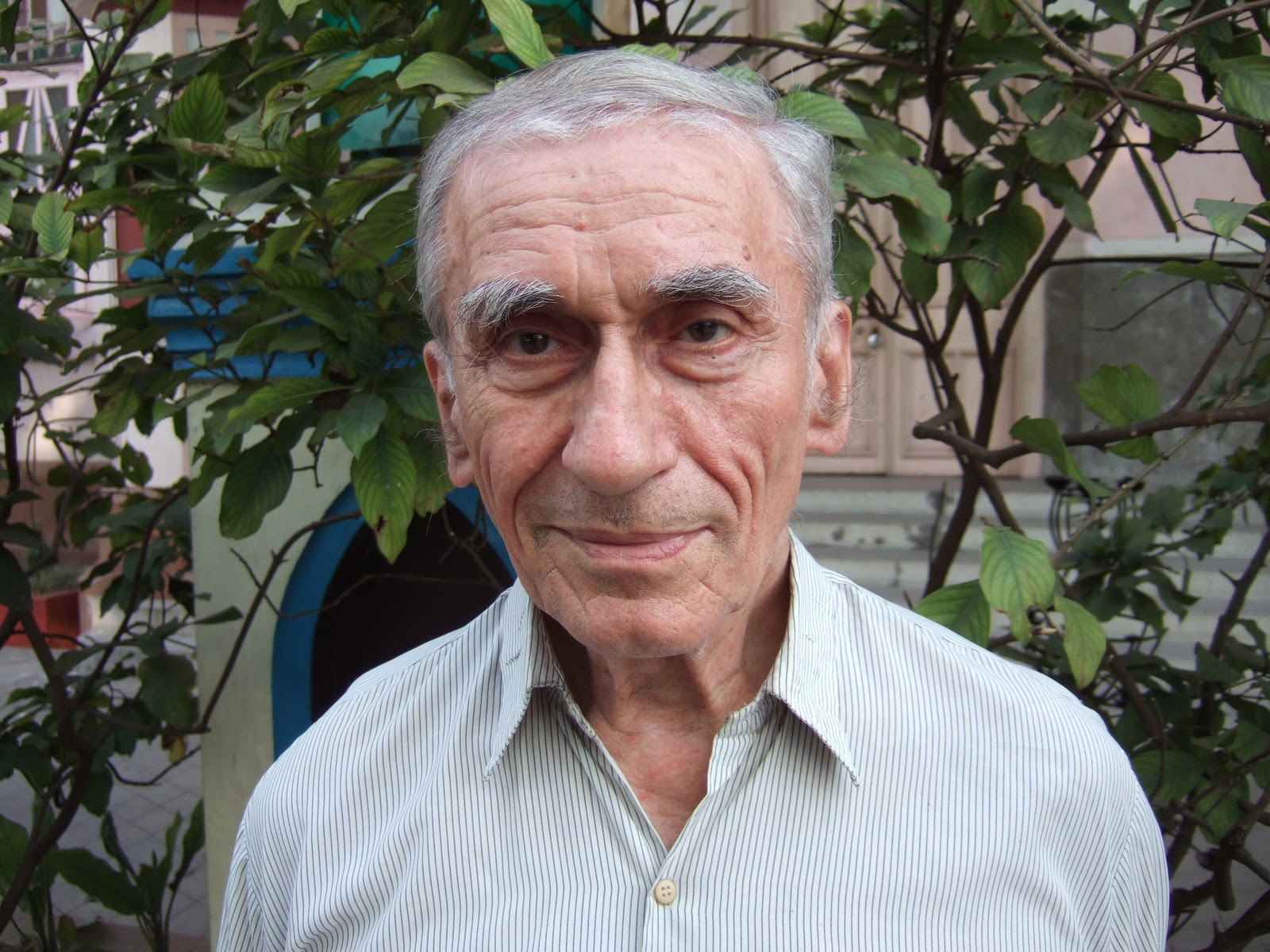
FATHER LAWRENCE ABELLO, S.J.

 
June 12, 1931 - January 22, 2012 

Father Lawrence Abello SJ, renowned professor, inventor and a devout companion of Mother Teresa passed away on January 22, 2012 at St Xavier's College, Calcutta (Kolkata), his home for twenty-five years. He is survived by his sister Ms Giacinta Auser and his brothers Father Louis and Tony Abello.

Born in Leuven, Saskatchewan, Lawrence Abello joined the Jesuits in 1956; he volunteered for the Darjeeling Mission and went to India in 1959, at the end of his novitiate and juniorate. His formation in India followed the usual route from philosophy in Pune to a teaching internship in Gayaganga, and theology in St Mary’s Kurseong, where he was ordained on March 19, 1966. After a period of spiritual renewal (tertianship in 1972-73) at Vinayalaya, Mumbai, he made final vows in Shembaganur on February 2nd, 1974.

In the meantime, he began what might be called his first career, as philosophy professor in several seminaries in India, during the 1960’s and1970’s, mainly in St Pius College, Mumbai.

Philosophy wasn’t his only interest in those days however; he was always drawn to the world of physics and finally entered that world at St. Louis University and completed an M.Sc. degree in that subject in 1971. On his return to India, he continued his philosophy lectures at St Pius till 1977, then returned to the USA for his PhD in physics at Wayne State University, Detroit; he held two patents for inventions. Before returning to India in 1986 on a visa which allowed him to teach in St Xavier’s, Kolkata, he was active in pro-life ministry, which he continued in India.

Father “Larry” was a devoted companion of Mother Teresa and her sisters, as confessor and guide. He was also the director of the many volunteers who came each year to work with the Missionaries of Charity, to initiate them into life in Kolkata, and especially into life among the poor of that city.

He was soon drawn to the work of Mother Teresa, and for the rest of his life his ministry revolved around it, and the parishes of the city where he became quite familiar. He obtained his Indian citizenship in 1991, through the intercession of Mother Teresa, with whom, we pray, he shares the life of those “who love the poor”.

Tuesday, January 24, 2012

St. Francis de Sales - Les Confirmations d'Embrun, Rockland

The Patron Saint of Catholic Communications, St. Francis de Sales produced and printed pamphlets explaining the faith and left them as flyers at households to win them back with love to the practice of the Catholic faith when many were scandalized by the corruption and failure of the church's leaders and were being attracted by Protestant tendencies. His winning ways won back many. 

Today he would no doubt make use  of social media to keep in touch with his flock and draw others to Our Lord in new evangelizing methods.  Please pray for us bishops, priests and others who, to share the faith, blog , use Twitter and Facebook--that we may be motivated by Christ's values alone.

On this day each year, the Pope releases a message for World Communications Sunday (that of the Ascension or the Seventh Sunday of Easter, this year May 20, 2012). 

This year's theme is
Silence and Word: Path of Evangelization:

Silence is an integral element of communication; in its absence, words rich in content cannot exist. In silence, we are better able to listen to and understand ourselves; ideas come to birth and acquire depth; we understand with greater clarity what it is we want to say and what we expect from others; and we choose how to express ourselves. By remaining silent we allow the other person to speak, to express him or herself; and we avoid being tied simply to our own words and ideas without them being adequately tested. In this way, space is created for mutual listening, and deeper human relationships become possible. It is often in silence, for example, that we observe the most authentic communication taking place between people who are in love: gestures, facial expressions and body language are signs by which they reveal themselves to each other. Joy, anxiety, and suffering can all be communicated in silence – indeed it provides them with a particularly powerful mode of expression.

Silence, then, gives rise to even more active communication, requiring sensitivity and a capacity to listen that often makes manifest the true measure and nature of the relationships involved. When messages and information are plentiful, silence becomes essential if we are to distinguish what is important from what is insignificant or secondary. Deeper reflection helps us to discover the links between events that at first sight seem unconnected, to make evaluations, to analyze messages; this makes it possible to share thoughtful and relevant opinions, giving rise to an authentic body of shared knowledge. For this to happen, it is necessary to develop an appropriate environment, a kind of ‘eco-system’ that maintains a just equilibrium between silence, words, images and sounds.


The process of communication nowadays is largely fuelled by questions in search of answers. Search engines and social networks have become the starting point of communication for many people who are seeking advice, ideas, information and answers. In our time, the internet is becoming ever more a forum for questions and answers – indeed, people today are frequently bombarded with answers to questions they have never asked and to needs of which they were unaware. If we are to recognize and focus upon the truly important questions, then silence is a precious commodity that enables us to exercise proper discernment in the face of the surcharge of stimuli and data that we receive.

Amid the complexity and diversity of the world of communications, however, many people find themselves confronted with the ultimate questions of human existence: Who am I? What can I know? What ought I to do? What may I hope? It is important to affirm those who ask these questions, and to open up the possibility of a profound dialogue, by means of words and interchange, but also through the call to silent reflection, something that is often more eloquent than a hasty answer and permits seekers to reach into the depths of their being and open themselves to the path towards knowledge that God has inscribed in human hearts.


MEMORIAL – ST. FRANCIS DE SALES, BISHOP, DOCTOR


O God, who for the salvation of souls willed that the Bishop Saint Francis de Sales become all things to all, graciously grant that, following his example, we may always display the gentleness of your charity in the service of our neighbour. Through our Lord Jesus Christ, your Son, who lives and reigns with you in the unity of the Holy Spirit, one God, for ever and ever.

* * *

Saint François de Sales, Évêque de Genève (1567-1622)

Prêtre (1593), missionnaire dans le Chablais calviniste (1594-1597), il devient évêque coadjuteur (1599) puis titulaire (1602) de Genève, avec résidence à Annecy. Il applique à son diocèse les méthodes préconisées par le concile de Trente. En 1610, avec Jeanne de Chantal, il fonde l'ordre de la Visitation, à la fois contemplatif et actif. Il donne l'essentiel de sa direction spirituelle dans son Introduction à la vie dévote (1609). Sa spiritualité souriante mais exigeante, portée par un grand talent littéraire, se retrouve dans Traité de l'amour de Dieu (1616) et Entretiens spirituels (posthume). Canonisé en 1665, il a été déclaré docteur de l'Église en 1877. (www.larousse.fr)

* * * * * *

CONFIRMATIONS


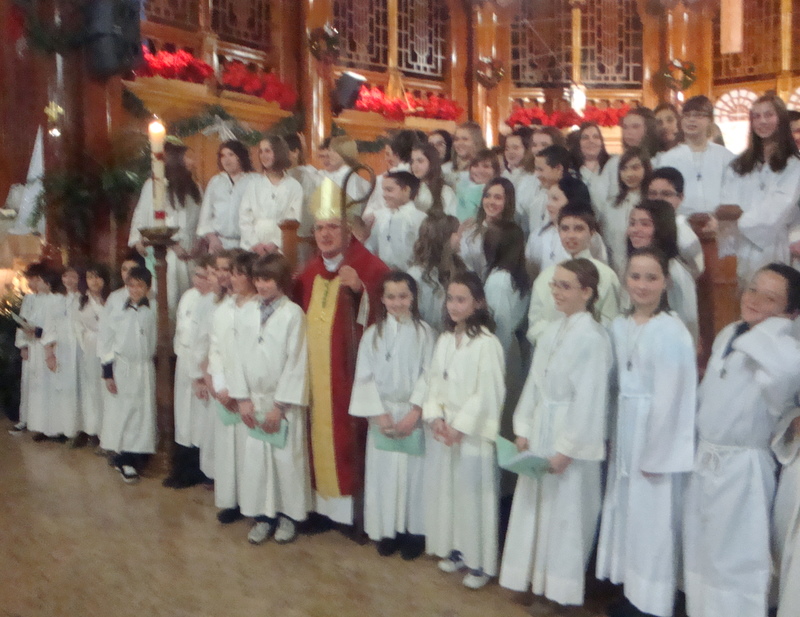
Récemment, j’ai présidé quelques célébrations du sacrement de la Confirmation pour les jeunes de deux paroisses vers l’est d’Ottawa: presque une centaine dans chaque communauté.  

Voici quelques photos :    

Paroisse Saint Jacques (Embrun):


* * * * * *

Paroisse Très-sainte Trinité (Rockland)


Monday, January 23, 2012

Lunar New Year of the Water Dragon in Ottawa Parishes


Several of our Ottawa parishes are caught up in the celebration of the Lunar [“Chinese”] New Year. The photos are taken from my visit to the celebration in the parish hall of  Sheng Shen (Holy Spirit) Chinese Catholic Parish yesterday (New Year’s Eve). Further pictures of the Mass and of the exchange of greetings with leaders from Our Lady of LaVang Vietnamese Parish on Friday will be uploaded later in the week.

AsiaNews.it is a Catholic website that focuses on the Church in Asia. The following is drawn from their informative item on the Lunar New Year:

Today, January 23, the Far East is celebrating the start of the Year of the Dragon. Along with China, Hong Kong, Macao and Taiwan, Vietnam, Japan, Korea, Singapore and Chinese communities all around the world, from New York to Toronto, from Melbourne to Indonesia, Thailand, Malaysia will celebrate.

The Dragon is the luckiest sign in the Chinese zodiac because it is the only mythological animal of the 12 signs (the others are all earthly animals: rooster, snake, rabbit, etc ...). This makes it a powerful celestial sign, which brings wealth, virtue, harmony and longevity. It is not by chance that the dragon has always been the symbol of the Emperor and the Chinese are known as "the sons of the dragon."

Chinese astrologers and their predictions have been fighting for some time against the Mayan predictions, which for 2012 foresee - no one knows how - the end of the world. For Eastern futurists, however, this year will fix the troubles of the past years in the spheres of economics and love.

2012 is a year of the "water" Dragon (the influence of one of the 5 original elements). The last such year was 1952. That, and the promise of happiness and wealth was enough to stir in much of the Chinese world to "rush" to have a child in the year of the Dragon! In China, experts are already predicting a 5% increase in births - even with the heavy limitations of the one-child law - and a 27% growth in sales of diapers!

We may ask, will the Year of the Dragon usher in democratic change in China? Maybe not. One thing is certain: this year will see civil society struggle even more in China to defend their rights against the excessive power of the economic and political oligarchy and that the Party will continue its policy of arrests of dissidents, lawyers, bishops and religious figures to avoid any "Arab Spring" made-in-China.

Finally, the Christians. The previous year of the Dragon was the Jubilee of 2000, which marked a revival of religion and faith in the world and in China. Nausea of materialism and the witness of Christians has produced much fruit, even if the government is trying in every possible way to divide the churches and communities.

Despite what many think, the Dragon is on the Christians side. It is true that in the Apocalypse the dragon tries to devour the child of the Woman (Revelation 12: 1-10), but the Chinese dragon is the not dragon of the West. In China, the dragon is one of the sources of the universe’s energy and the swift messenger of the Lord of Heaven.

“Translated” into Western culture, a dragon would be closer to a guardian angel or an archangel, and therefore, the Chinese dragon works for the children of the dragon, but also for the Church!


Photo credit: Mr. Lau (above)

Sunday, January 22, 2012

Jesus Calls Simon & Andrew, James & John - The Death of a Friend - A Visit to Valrideau University Residence


THIRD SUNDAY IN ORDINARY TIME


Almighty ever-living God, direct our actions according to your good pleasure, that in the name of your beloved Son we may abound in good works. Through our Lord Jesus Christ, your Son, who lives and reigns with you in the unity of the Holy Spirit, one God, for ever and ever.


* * * * * *
FATHER BILL ADDLEY, S.J.

October 16, 1943 - January 21, 2012
R.I.P.


Yesterday morning, I received the sad news that Father William Addley had died in St. Michael's Hospital after surgery for abdominal cancer that had been diagnosed shortly after Christmas.  He was just about to complete this summer a 13-year stint as Pastor of Our Lady of Lourdes Parish in downtown Toronto.

"Father Bill" as he was universally known had been assistant to the the Jesuit Provincial, then from 1984-1990 Provincial of the Jesuits in English Canada Province (at that time known as the Upper Canada Jesuit Province).  He was very much appreciated by so many of his Jesuit confreres for whom he showed great esteem and support, often in hidden ways and preferably with himself out of the limelight.

A proud Haligonian, he probably knew that it would take some adjusting on my part--as someone who had "come from away"--when I went to the Atlantic School of Theology in his home town to teach in 1975.  So, he called me on the telephone from time to time, to ask how I was doing and to give me news of the brethren in Toronto and elsewhere across Canada, to ask advice and to offer some in my role as an interviewer for aspiring candidates to the Society. 

We became friends through those calls and later when I had moved to Toronto as we went looking for housing for the Regis College Jesuits in the area around the University of Toronto. His sudden departure from our midst is hard to fathom: How mysterious God's judgments; how inscrutable his ways.

May the Lord grant this servant of his a merciful judgment and lead him to the waters of eternal life in God's Kingdom that he strove to serve.  He will be missed. 

Rest in peace, my brother Bill.


* * * * * *


A WARM WELCOME ON A STORMY NIGHT


Last Tuesday evening was a messy one for getting around Ottawa with several centimeters of snow being covered with freezing rain.  However, the sand was placed on the steps of Valrideau and the welcome mat was out for me to visit this residence, under the direction of Opus Dei, which houses mainly university students but also some professional women.

The house is spacious and well-organized around a beautiful chapel and dining and meeting rooms that welcome women who wish to grow in their understanding and practice of the faith.

Over freshly baked desserts, juices, teas and coffees, I enjoyed a wonderful exchange with the residents, learning about their study and work programs, interests and spirituality.


Saturday, January 21, 2012

St. Agnes, Virgin Martyr - The Consecration of St. Isidore Church


MEMORIAL – ST. AGNES, VIRGIN, MARTYR

Almighty ever-living God, who choose what is weak in the world to confound the strong, mercifully grant that we, who celebrate the heavenly birthday of your Martyr Saint Agnes, may follow her constancy in the faith. Through our Lord Jesus Christ, your Son, who lives and reigns with you in the unity of the Holy Spirit, one God, for ever and ever.

* * *


Pope says virginity and martyrdom
of St. Agnes example of faith


Pope Benedict XVI held up the life of a young virgin and martyr as an example to seminarians of the total commitment to Christ required by young men seeking to enter the priesthood.

The pope also said that a solid cultural background and intellectual understanding of faith was essential in the formation of priests as spreaders of the word of God. The pope spoke in an audience yesterday with students from one of Rome's oldest and most prominent seminaries, the Almo Collegio Capranica.

Benedict told them that while martyrdom marks a final and heroic act, the “informed, free and mature” choice of virginity is rather the “fruit of a long friendship with Jesus” developed through close knowledge of his words and constant prayer.

Legend says St. Agnes died in 304 or 305 at the hands of the suitor she spurned so she could remain faithful only to Christ. Pope Benedict said the saint faced her fate with exemplary courage. Her martyrdom illustrates “the beauty of belonging to Christ without hesitation.”

The path to the priesthood requires a similar level of commitment, the pope said, as well as integrity, well-roundedness, ascetic exercise and “heroic faith.”

The Holy Father reminded the seminary students that “faith has its own rational and intellectual dimension, which is essential to it,” and that it is the student's responsibility to assimilate the “Christian synthesis of faith and reason.” (Catholic News Service)

* * * * * *
 
 THE CONSECRATION
OF ST. ISIDORE CHURCH,
SOUTH MARCH./KANATA NORTH
 

CainCo Photography, Kanata
 
Last Saturday, I joined the parishioners of St. Isidore Church for the dedication of the third church on this site.  The church is bright and airy and it is clear that the latest embodiment is striking and is able to meet the growing needs of the congregation for the forseeable future.
 
The statue of St. Isidore has been carried over from the previous church, opened in 1887, some 125 years ago; the statue rests on a pedestal composed of stones from the previous building.  Also, the stained glass windows have been refurbished and a striking brightness to the community's worship.  There is a large atrium at the entry to the church and a covered indoor walk-way to the parish hall.
 
The homily for the occasion follows, with a photo display:
 
 
The Consecration of St. Isidore Church—South March, ON

Second Sunday of Ordinary Time (Year “B”)-January 14, 2012


CALLED BY GOD TO BE HIS DWELLING
[1 Samuel 3.3b-10, 19, [Psalm 40]; 1 Corinthians 6.13c-15a, 17–20; John 1.35–42]


At the start of the ceremony the key to the building was handed over to me (CainCo Photo).


God delights to dwell with you (cf. Proverbs 8:31). He loves you so much, He sent His son to die in your place, because you—and I—merit death due to sin. Instead, He offers you eternal life. He has given you the Bible. He has given you the saints. He has given you brothers and sisters—the Church—to walk with you. And, He has given you this new church building to worship in. This is cause for celebration! We can rightfully cry, “Hallelujah!”


The Fourth Gospel begins Jesus’ ministry, by having Him invite a group of ordinary men to spend time with him. He asks them to “come and see” where he “abides,” where he lives.


John’s gospel shows Jesus engaging His disciples, as He engages you and me today. He asks questions to reveal himself, to reveal themselves and to reveal ourselves.


Jesus revealed to Peter, “You will be called Cephas,” the Rock on which he will found a community called the Church (John 1.42).

We discover that Jesus resides primarily in the bosom of the Father. No temple or church building can contain all that is God. Still, Jesus is present in you and me, the body of Christ, the capital C-Church: You, and you, and you, are his public witness. Your generosity, your gentleness, your pure heart, and every other virtue God has given to you, attracts others to Christ. It is now your turn to say, “Come and see!”


The early Christians met secretly in house churches because soldiers would immediately destroy public churches and martyr the worshippers. Fortunately for us in the Western world, the emperor Constantine lifted the persecution of Christians in the year 313—almost 1,700 years ago—and allowed the practice of the faith and the construction of religious buildings.


The first St. Isidore church was a round structure built in South March by mainly Irish settlers in the 1830s. The second church was built 125 years ago in 1887, the forerunner to the church we dedicate today.


Like you, a lower case c-church building is a public witness to Christian faith. The architecture, the sacred art, and the sacraments celebrated here, all declare that Jesus is Lord. Every day for generations to come, this beautiful church will beckon to passers-by “Come and see!”


In today’s reading from the First Book of Samuel, we read that Israel was in a sad state. The disobedience and immorality of the two sons of the temple priest Eli reflected the corruption of the country. Eli was a permissive father and his eyes were growing dim, but his priestly anointing allowed him to discern that God was calling Samuel, a boy consecrated to serve in the temple.


“When God calls again, Eli told Samuel, say to Him, ‘Speak, Lord, your servant is listening’.” This Samuel did. He became a famous “seer” among God’s people, showing them the right path. God did not allow any of Samuel’s words to fall to the ground, fruitless.

 
Isn’t that what is most important for your faith life celebrated in this new church? That constantly, you open yourself to God’s will, saying “Speak, Lord, your servant is listening!” in response to God’s Word proclaimed here.


This Sunday’s readings fit this church’s consecration. They involve a place of divine encounter—God’s Temple—as well as a divine call. Samuel and the disciples were called to service. Similarly, Paul invites us to “glorify God in your body” because, he tells us, “you are God’s temple.”


Like Eli’s Israel, the Corinthian Church was in moral trouble. They saw themselves as enlightened Christians. They were smug about sinful practices. St. Paul patiently set them straight, by showing them that they cannot honour Christ by dishonouring their bodies.

 
The Corinthians misunderstood healthy sexuality. They called evil good, like the incest of marrying one’s stepmother (1 Cor 5.1–13) and frequenting prostitutes (1 Cor 6.15). Paul corrects that error in today’s epistle reading.

The Corinthian problem is the distortion of the freedom that Christ had won for them. They justified taking licence by mouthing slogans (“Everything is permitted me,” twice in verse 12). Paul replied that this mock freedom can enslave (“but I will not let myself be dominated by anything”—1Cor6:12).


Former pastors were in attendance, including Msgr. Robert Martineau

 
Paul knew that this world will end, not in death, but in resurrection (“God who raised up the Lord, will also raise us up through his power”). Paul showed that those who are united with Christ in baptism become members of his Body. As Christ’s Body, we are the temple of the Holy Spirit who dwells in us. We have been bought at great cost: the death of Jesus Christ out of love for us! Therefore, our mission is to glorify God in our body, with the kind of behaviour befitting this noble status.


Dear friends, what you will celebrate here each Sunday in word and sacrament is the eternal life Jesus won for you by His sacrificial death on the cross. He is “the lamb of God who takes away the sin of the world.”


In the Fourth Gospel—often called the “Spiritual Gospel”—Jesus helps you find your deepest longings for God, in your heart of hearts, by asking you “What are you looking for?”


What are you looking for? Happiness? Fulfilment? The meaning of life? Your creator? Eternal life? Jesus says, “Come and see.”


Through the intercession of the saints, particularly Our Blessed Mother and your patron St. Isidore, may this always be true, in this lovely new church. Here, your faith is called to a most profound activity. May you always hear God’s Word in this sacred place and see the Father through Jesus, our Eucharistic Lord in this his dwelling-place. Amen.