Monday, June 21, 2010

National Aboriginal Day - Memorial of St. Aloysius Gonzaga

National Aboriginal Day is marked each year on June 21 to honour the achievements of Aboriginal Peoples in all areas, including the arts, language, reverence for the land and spirituality.

June 21 was first proclaimed in 1996 as an annual occasion to recognize the diverse cultures and outstanding contributions to Canada of the First Nations, Inuit and Métis. Collectively these groups make up the Aboriginal Peoples of Canada.

The date was selected for several reasons, including the fact that it coincides with the summer solstice.

In 1982, the National Indian Brotherhood (now the Assembly of First Nations) called for the creation of a National Aboriginal Solidarity Day to be celebrated on June 21. In 1995, a similar recommendation was made by the Royal Commission on Aboriginal Peoples. It called for a National First Peoples Day to be designated.

Also in 1995, a national conference of Aboriginal and non-Aboriginal people, known as The Sacred Assembly, called for a national holiday to celebrate the contributions of Aboriginal Peoples to Canada.

The first National Aboriginal Day was proclaimed by the Governor General the following year. It is now part of a series of 'Celebrate Canada' days beginning on June 21 and followed by St-Jean Baptiste Day on June 24, Canadian Multiculturalism Day on June 27 and Canada Day on July 1.

* * * * * *

St. Aloysius Gonzaga, one of the boy saints, martyr of charity and patron of caregivers to those with AIDS

Aloysius Gonzaga (Luigi Gonzaga, 1568-1591) gave up a privileged life and a princely inheritance to live the vows of religious life even to the point of contacting the plague because of his selfless care for people already sick with it. He was the eldest son of the Marquis of Castiglione, and heir to the family title. The Gonzagas were known as patrons of Renaissance artists, and they ruled what amounted to a kingdom.

As a young man Gonzaga wore a suit of armour and walked at his father's side when he reviewed troops. His life began to change after he contacted malaria and suffered frequent bouts of fever. As early as age seven, he became attracted to prayer and turned away from the courtly life around him. When he was nine, he and his brother were sent to Florence to learn the customs of princes at the court of their father's friend the Grand Duke Francesco de' Medici.

The Medici court was one of the grandest, most opulent in Europe, but also one full of intrigue, deceit, sex and violence. The young Gonzaga withdrew from this world and became firm in his desire to never offend God by sinning. In November 1579 he moved to Mantua to stay with the duke, a relative; in that residence he discovered a book with brief lives of the saints. He also began to pray the Psalms daily and later started meditating after he discovered a prayer book written by the Jesuit Peter Canisius. His piety included daily Mass, weekly communion and fasting three days a week.

The young heir traveled with Maria of Austria, the daughter of Charles V, on her way to Madrid in 1582. He became a page attending the duke of Asturias, the heir apparent, and was later made a knight of the Order of St. James. The higher he rose in royal society, however, the more his thoughts turned to becoming a Jesuit like his confessor in Madrid. On Aug. 15, 1583 he had an experience in prayer that confirmed his decision. When he told his confessor, that man said he would have to get his father's permission.

The marquis was enraged by the news that his heir wanted to renounce all that had been so carefully prepared for him. The whole family returned to Castiglione and then the marquis sent his two sons on a tour of the courts of Italy, hoping that the experience of such refined living would change his son's mind and relieve the tension that had developed between two strong-willed individuals. The son's determination proved to be stronger, and the father finally granted his assent. In November 1585 Aloysius renounced his inheritance in favor of his brother Rudolph and set out for Rome where he presented himself to the Superior General, Claudio Acquaviva, who admitted him to the novitiate of Sant'Andrea.

Although the new novice was not yet 18, his background made him mature beyond his years, and he found the novitiate less rigorous than the life he had been living by his own decision. He nevertheless obediently followed the novitiate rules and the guidance of his novice master. He enrolled in the Roman College to finish philosophy studies before taking first vows, and then went immediately into theology right after. He returned to Castiglione in 1589 to negotiate peace between his brother and the duke of Mantua, and then returned to Rome in May 1590.

Plague and famine struck Italy the following year and Gonzaga threw himself into caring for the victims of the plague. He begged alms for the sick and physically carried those he found in the streets to a hospital where he washed and fed them and prepared them for the sacraments. He told his spiritual director, Robert Bellarmine (who would later be recognized as a saint), that he had a premonition he would die soon.


So many young Jesuits were becoming sick that the superior forbade Gonzaga to return to the hospital. Gonzaga did get permission to work at Our Lady of Consolation hospital which did not treat anyone with contagious diseases. Gonzaga went there but contacted the plague when he cared for a man who had the plague.

The young Jesuit put himself to bed on March 3, 1591; his condition worsened and then improved somewhat, but he could not recover full health. Fever and a cough set in and he slowly lingered on. He knew he was dying and asked to receive communion. Two Jesuits watched with him through the night and saw his face change as he held onto a cross and called the name of Jesus. He was only 23 when he died. His body is now kept in the church of St. Ignatius in Rome.

Sunday, June 20, 2010

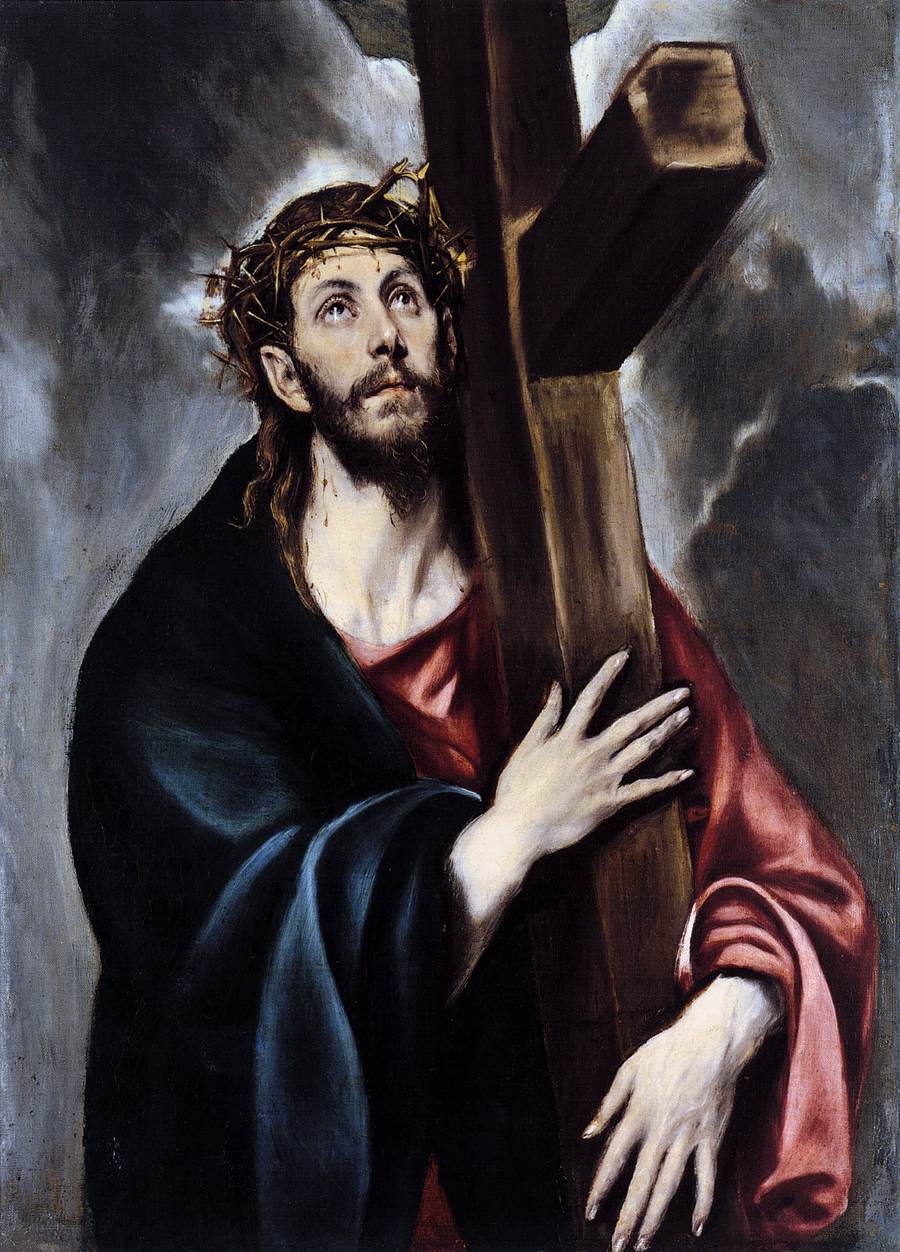
Twelfth Sunday in Ordinary Time: "Taking Up the Cross Daily"

Twelfth Sunday in Ordinary Time (Year "C") June 20, 2010: JESUS' MESSIANIC AGENDA: TAKING UP THE CROSS DAILY [Texts: Zechariah 12:10-11; 13:1 [Psalm 63]; Galatians 3:26-29; Luke 9:18-24]

Today we continue the on-going reading of Luke's gospel begun last week with the story of the Sinful Woman who wept at Jesus' feet tears of joy and devotion.

Now, from Luke, we learn that it was Jesus' feeding of the 5000 which led the crowds to suspect that Jesus might be an eschatological figure (`John the Baptist ... Elijah ... [or] that one of the ancient prophets has arisen'). For their part, the disciples--through Peter their spokesman--confessed their conviction that Jesus was "the Messiah of God".

If, as many scholars suspect, Luke was following Mark's story line in the account of Jesus' early ministry, he has linked the feeding of the crowds with Peter's confession by omitting a major portion of Mark's narrative (6:45-8:26), notably the feeding of the 4000.

Further, Luke has not chosen to inform his readers that the location of this watershed moment was near "the villages of Caesarea Philippi" (Mark 8:27). Instead, Luke focused on the fact that the dialogue happened "once when Jesus was praying alone, with only the disciples near him".

Peter's confession was followed by Jesus' command to keep quiet about His identity and by the first prediction that the Son of Man would fulfil His messianic destiny by suffering, dying and rising from the dead on the third day, as in the gospels of Mark and Matthew.

Still, Luke made no mention of Peter's rebellion against Jesus' teaching or Jesus' subsequent reply with its rebuke of Peter's too "human" way of thinking (cf. Mark 8:32-33; Matthew 16:22-23).

In this way, Luke enhanced the portrait of Peter offered to the church. When Jesus prayed for Peter in the passion narrative, He promised that after his conversion he would strengthen the brethren (22:31-34).

In Luke's perspective, the rich teaching of Jesus on discipleship served not as a corrective to a mistaken viewpoint, but took its place as the dynamic core of the gospel way leading to eternal life.

Five sayings described the demands of being a disciple to Jesus; only two are given in today's gospel reading (Luke 9:23-24), but we shall comment on the others as well (9:25-27).

Everyone who wants to be a follower of Jesus must do so every day. Only Luke describes discipleship as this daily imperative. Indeed, while "denying self and taking up the cross" appear in the Greek aorist tense (a single definite action), the present imperative of the verb "to follow" should probably be translated as "keep on following me".

The second saying unveils the paradox that lies at the heart of the gospel, "those who want to save their life will lose it, and those who lose their life for My sake will find it". Faced with the option of pursuing Jesus' messianic agenda or indulging one's own interests, Jesus says it is only the former that leads to fulfilment.

The third saying addressed marketplace issues ("what does it profit them if they gain the whole world, but lose or forfeit themselves"). Here we note that the NRSV plural translation, adopted for the sake of inclusiveness, takes some of the edge off challenges Jesus addresses to each person. Jesus contends that there are dimensions of life vital to happiness which cannot be satisfied by possessions or wealth.

The fourth saying demands public expression of discipleship, which will be acknowledged at the end of time. Those "ashamed of" Jesus and His words in this life will be shamed "when the Son of Man comes in glory".

The fifth saying assured Jesus' hearers that some present would experience aspects of the coming of God's Kingdom, even though its fullness must remain a future hope.

In a text fulfilled in Jesus' piercing on Calvary (John 19:37), Zechariah foresaw a period of mourning in Israel ("as one mourns for an only child ... as one weeps over a firstborn"). After this period of grief, however, God would provide for the house of David a fountain of cleansing to save people "from sin and impurity".

Paul assured the Galatians--tempted to abandon their faith-commitment to the gospel of the cross--that through their baptism they had become a new creation. Henceforth, no distinction (Jew or Greek, slave or free, male or female) would be of any account, "for all of you are one in Christ Jesus".


* * * * * *

Photos of Our Lady of the Visitation II: The New Hall's Dedication & Blessing

The KofC Honour Guard

The guests included an MP, an MPP and an Ottawa City Councillor

The ribbon-cutting

Photo credit: Teena Mallory-Gainsford

The parish's fundraising projects include a cookbook with 347 recipes (including some traditional, old-style ones) at $10 each and a double CD by Spirit Highway, a folk group that leads worship at Our Lady of the Visitation. The first CD is a narration of the Way of the Cross by pastor Father Brian Hennessey and the second CD contains fifteen songs by the trio: cost $15. All proceeds to the Building Fund.

More info at www.olvis.ca.

Saturday, June 19, 2010

St. Romuald - Towards Healing in Canada - Canonical Visit to Our Lady of the Visitation Parish

St. Romuald, the founder of the Camaldolese Order, could not decide for a considerable time whether to serve God in a religious life or to remain in the world. After his father killed a relative in a duel at which Romuald was forced to be present, he went to the monastery of St. Apollinaris, near Ravenna, and did penance for forty days.

Later, he entered this same monastery as a monk. Then he became a follower of the hermit Marinus in Venice. In the course of time he founded an order of hermits which received its name after the most famous of his foundations, Camalduli in Tuscany.

Romuald's was one of the strictest orders for men in the West (a branch of the Benedictine Order). Members live isolated in small huts, observing strict silence and perpetual fasting, constantly praying or engaged in manual labor. Our saint enjoyed the grace of bringing sinners, particularly those of rank and power, back to God.

When he died, he was a little over seventy years; he had never used a bed, had always sought out ways of practicing severe penances. 15 years later his pupil, the holy doctor of the Church, St. Peter Damian, wrote his biography.

"His greatness lies in the rigorous and austere character of his interpretation of monastic life-an approach that was quite singular and unique. In the deepest recesses of his being, Romuald was an ascetic, a monk; not perhaps, a monk of that serene peace and self-possession exemplified by St. Benedict in his life and described by him in his Rule.

Nor was Romuald an organizer who through prudent legislation enabled his spirit to flourish and affect great numbers. He reminds us of the stolid figures inhabiting the Eastern deserts, men who by most rigorous mortification and severest self-inflicted penances gave a wanton world a living example of recollection and contemplation. Their very lives constituted the most powerful sermon. It is in company with men like these that St. Romuald continues to live."

Romuald was not at all a fluent reader. Whenever he made another of his many mistakes, Marinus, his teacher, beat him on his left cheek. Finally it became too much for Romuald. "But, dear master," he said modestly, "hit me on the right cheek in the future. My left ear is almost deaf." The master was surprised at such patience and thereafter acted more considerately.

The saint loved to say, "Better to pray one psalm with devotion and compunction than a hundred with distraction."

When the holy man felt his end was near, he retired to the monastery at Val di Castro. After so many journeys he was eager to begin his final pilgrimage to an eternal resting place. Before the reform of the Calendar in 1969 his feast was celebrated on February 7, the anniversary of the translation of his relics in 1481. His feast is now June 19, the day he died in 1027. In the Calendar reform the Church has tried to move the feasts of the saints to their "birthday" — referring to the day on which the saint died and celebrated his/her birth into heaven. --Excerpted from Pius Parsch, The Church's Year of Grace

* * * * * *

TRUTH, RECONCILIATION, RESTORATION, HEALING

This week we have seen powerful images and reports of the wounds and on-going suffering of those who attended the Indian Residential Schools. The process begun will continue over a five-year period, in attempt to help the general public understand and empathize with the suffering endured.

May the stages of truth-telling prepare the ground for reconciliation among all those affected--and that should include, in some way, every Canadian--and, ultimately for restoration of dignity in the equilibrium of right relations (justice) so that true healing may be effected.

On Thursday, I met with John Corston, who with his wife directs the Kateri Native Centre (on Bronson Avenue) and established cooperative ventures with other First Nations parties (the Odawa Centre, the Golden Lake and Sagamuk reserves, etc). We are considering how the healing process can be furthered in the Archdiocese in particular and in the Ottawa area generally.

Let us remember this intention in prayer.

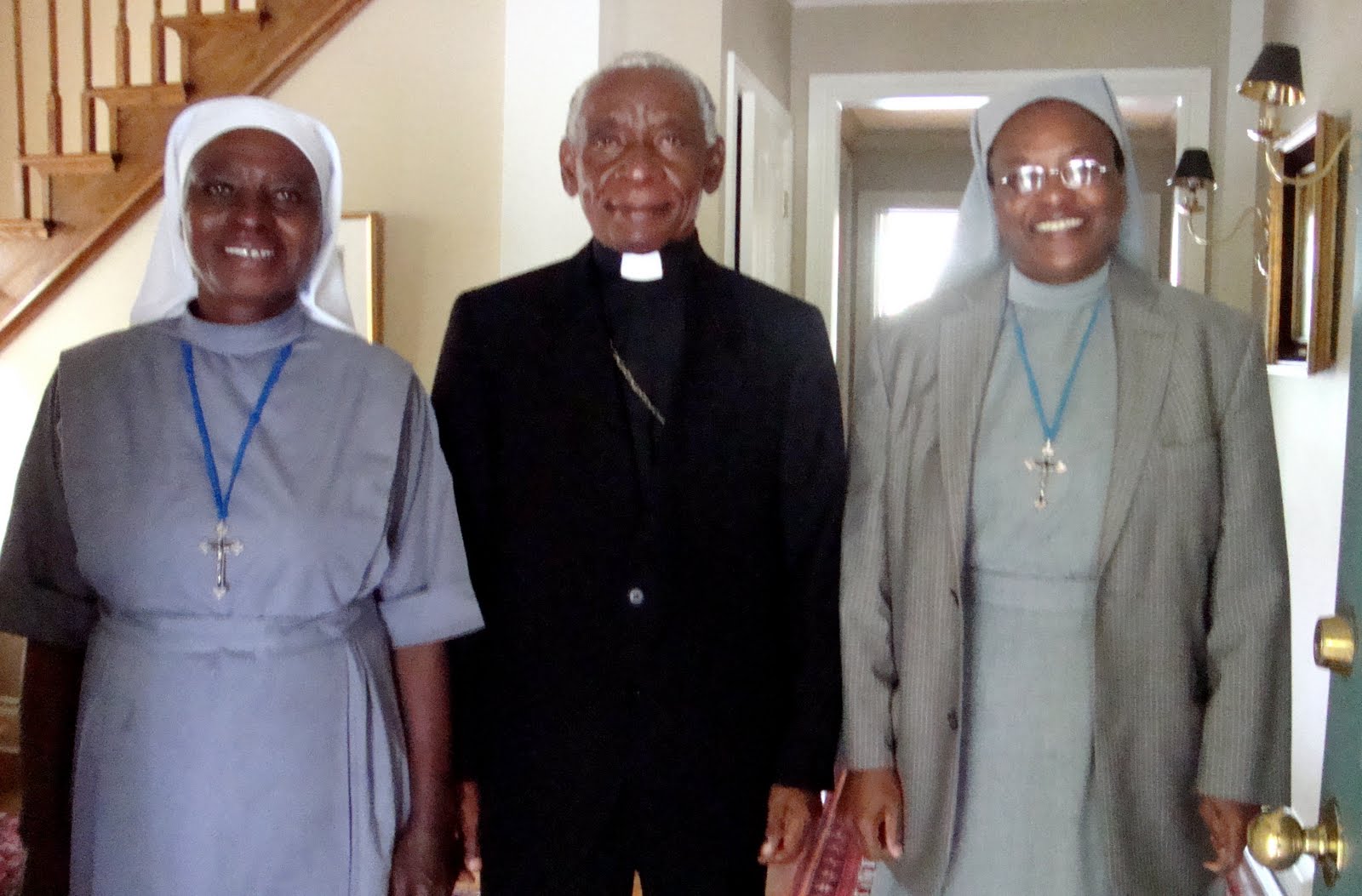
Mgr Gerald Lacroix (auxiliary of Quebec), Mgr Jacques Landriault (emeritus of Timmins), John Corston (director Kateri Ministries, Ottawa)

* * * * * *

Photos from the Canonical Visit to Our Lady of the Visitation Parish, South Gloucester

Last week, Father Joseph Muldoon (who had been its pastor 1982-87) and I engaged in the Episcopal Visitation of the Parish of Our Lady of the Visitation, South Gloucester.

The area is a growing one and the church one of the earliest erected in what is now the Archdiocese of Ottawa. Recently, the church has been restored and refurbished, a new rectory was constructed on the site of the old one and a new parish hall complex has just been built and our visit coincided with the new hall's dedication and blessing in the presence of a large number of parishioners, an honour guard of the Knights of Columbus and several civic dignitaries.

Photos from the dedication itself will be part of tomorrow's post; here are photos from the visit to St. Mary's School on Thursday, the weekend liturgies and the Saturday evening dinner and discussion with representatives of the parish pastoral and finance councils and other parishioners:


Friday, June 18, 2010

Mgr Lacroix, Ottawa Priests Reflect on "Evangelization" - Photos of SCJ Canadian Centennial


Earlier this week, the Priests of Ottawa gathered at the conference rooms of the Museum of Science and Technology.

It was a day to celebrate priesthood by reflecting on Evangelization, a theme closely associated with priestly life, with input from Mgr Gérald Lacroix, auxiliary bishop of Quebec.

Reared in a francophone family that had emigrated from rural Québec to Manchester, New Hampshire, Bishop Lacroix spoke of the experience of a remarkable change that took place in his parents as the result of a spiritual encounter that brought joy to his whole family and sparked his interest in sharing his faith. He suggested that to renew our parishes, we need to facilitate lay-clergy collaboration and faith-sharing groups based on the Word of God.

Reminding his listeners of the ongoing significance of Pope Paul VI's Post-synodal exhortation on evangelization (Evangelium nuntiandi), Bishop Lacroix noted that many people who are distant from the Church would find it hard to enter directly into Sunday Mass. So, "vestibules" (programs where they come to share their faith) to help them get used to the joyful themes of our life in Christ need to be established.

Some photos of the gathering:


* * * * * *

CENTENNIAL OF THE SACRED HEART FATHERS IN CANADA

Last Friday, I joined the Sacred Heart Fathers and many of their collaborators and friends who came together for a Mass of Thanksgiving in observance of the Centennial of the arrival of their forebears who came initially to Western Canada (northern Alberta).

The celebration at Resurrection of Our Lord Parish, which is under the spiritual care of Sacred Heart Priests, was a joyful occasion.

Father John Van den Hengel, who has recently joined the congregation's generalate in Rome after many years involved in Catholic education in the Ottawa area, gave the homily.

A lively and cordial reception followed in the parish hall.


Thursday, June 17, 2010

Visitors: a Bishop from Tanzania, a newly-ordained Jesuit priest

Earlier this week, I received two guests: Bishop Fortunatus Lukanima, emeritus of Arusha, Tanzania and Father John D. Meehan, S.J., newly-ordained to the priesthood.

Bishop Fortunatus is the guest of The Canada Africa Community Health Alliance (CACHA) and is travelling the country from his base in Ottawa to raise awareness of health and other needs in his homeland Tanzania, where he assists farmers, fishers and others to develop their economy.

THE "WHAT" OF CACHA

This humanitarian foundation offers basic health care to isolated African villages, participates in the fight against HIV/AIDS, and contributes to the training of human resources both in Canada and in the host countries of Gabon, Bénin, Tanzania and Uganda.

The Canada Africa Community Health Alliance (CACHA) is a humanitarian organization that seeks to improve population health and provide HIV care and education to remote African communities. We accomplish this through the provision of adequate resources based on the determinants of health that include: childhood education, water and sanitation, women's rights, income security, housing and nutrition. We provide materials, infrastructure, and the exchange of skill development in order to create a positive outcome on health in supported regions of operation. We seek to engage in strategic partnerships and build programs to ensure sustainability, transparency and accountability.


* * * * * *

Father Meehan came to do a search in the Public Archives for photographs that could be used to illustrate a book he recently completed on Canada-China relations.

We were able to concelebrate the Eucharist and get caught up on all the activities he has been involved in since his ordination. There were Masses of Thanksgiving at the Toronto Newman Centre, where he had served as deacon and pastoral worker and in Japanese for the small Toronto Japanese community he has come to know as a result of his historical research on Canada-Japan relations.

This week, he will celebrate a Mass of Thanksgiving at St. Patrick's Basilica, Montreal on Saturday afternoon and another on Sunday morning at the Gesu Church there.

Father John will be teaching next year at Campion College, the Jesuit federated-college at the University of Regina. Best wishes and prayers for a fruitful teaching priestly ministry!

Wednesday, June 16, 2010

Photos of Paul Beaudoin's Diaconal Ordination


Diaconal Ordination of Paul Beaudoin, Feast of the Immaculate Heart of Mary (June 12, 2010), Assumption of the Blessed Virgin Mary Church, Ottawa, ON - FOLLOWING MARY'S LEAD IN SERVICE [Texts: Isaiah 61:9-11; (1 Samuel 2:1, 4-8); Acts 6:1-7; Luke 2:41-51]

My dear ordinand and my dear brothers and sisters in Christ:

If one were to imagine Luke as a preacher of the gospel about Jesus and ask about his favourite motifs, the heralding of “good news” to the poor and outcast would rank high on the list. So also would the themes of the universality of God's saving purpose, the blessings of poverty and the dangers of wealth.

Prominent, too, in Luke's depiction of the way things are for Christ Jesus and His followers, are the role of the Holy Spirit in both the life of the Teacher and His disciples. Prayer and praise of God are frequently on His lips and on theirs, as are the joy and praise which dwelling in God's presence brings.


Luke was deeply aware of the role and significance for the early Christian community of the twelve apostles to whom Jesus entrusted governance of the faith community He established. But the evangelist was equally conscious of the key role played by women in receiving, supporting and furthering God's saving plan during Jesus' public ministry and in the first years of the fledgling Church.

Only Luke tells us that, as Jesus went through the Galilean cities and villages proclaiming and bringing Good News of the Kingdom of God, “the twelve were with Him” accompanied by some women -- Mary Magdalene, Joanna the wife of Herod's steward Chuza, Susanna – “and many others, who provided for them out of their resources” (8:1-3). The word that is used of the women's ministry is in Greek diakonein, from which we get the word “deacon”, the ministry to which Paul is being ordained today.

That women, and especially Mary, model a disciple's receptivity to the gospel message is powerfully displayed in the account Luke gives of Jesus’ conception, birth and infancy. Unlike Zechariah's doubting question to the angel Gabriel on learning his wife would conceive (1:18), Mary's question at the annunciation contained no connotation of unbelief (1:34).

Gabriel explained that her conception of Jesus would take place by the overshadowing of the Holy Spirit so that her child would truly be called “Son of God” (1:35). Mary's reply manifests the classic expression of trust in all God might ask of a creature, “Here am I, the servant of the Lord; let it be with me according to your word” (1:38).


As the infancy narrative develops, we see Mary continue to ponder on the meaning of what is happening to herself and her Child. After the shepherds come to marvel at their new-born Saviour and Lord we are told that “Mary treasured all these words and pondered them in her heart” (2:19). That same response is hers at the close of the episode where Jesus was lost and then found in the Temple, declaring that He had to be in His Father's house, about His Father's business, “His mother treasured all these things in her heart”.

Today's feast invites us to reflect on Mary's Immaculate Heart, undivided in its openness to the Father's will and always desirous to participate in the saving ministry of her Son. She is a model of the receptivity to God's word that must undergird any ministry of the Church.


The gospel invites us to ponder ourselves on the mystery of family life, the context in which Paul will carry out his diaconal ministry. At the heart of family life are all the joys and happiness of the human condition.

These joys of the people of God who delight in salvation are affirmed in the beautiful text from Isaiah. “I will greatly rejoice in the Lord, my whole being shall exult in my God; for He has clothed me with the garments of salvation, He has covered me with the robe of righteousness” (61:10).


When the Lord enters into people's lives, the joy of friendship with God overflows into prayer and praise. Inspired by the Spirit, Mary testified to this, “My soul magnifies the Lord, and my spirit rejoices in God my Saviour”.

But the sorrows, anxieties and concerns of daily human life are not absent from any family life in which parents and children seek to find their own place as they grow to full maturity in Christ. “Child, why have you treated us like this? Look, your father and I have been searching for you in great anxiety?” And Jesus' reply, “Why were you searching for me?” But they did not understand what He said to them.

And so on this day in which our brother Paul is ordained to diaconal ministry we pray for Linda his spouse, for their two daughters and four grandchildren, that they may enjoy a family life that is truly blessed by the Lord, where each may find his or her right place in God's household.

Tuesday, June 15, 2010

Gathering of Marriage Tribunal Officials at the Diocesan Centre

Last week, our Judicial Vicar, Father Vincent Pereira convoked a gathering of men and women who are involved in serving the Catholic faithful in the Catholic Marriage Tribunals of the Ottawa ecclesiastical province (dioceses of Hearst, Timmins, Pembroke and Ottawa).

The occasion allowed persons who are in contact with each other by post, phone and electronic mail to meet in person and to find support in the often difficult ecclesial service of meeting with men and women whose marital difficulties raise the issue of whether there was a true marriage, as they simultaneously strive to defend the bond of marriage as willed by God the Creator for humanity and by Christ Jesus for his disciples as a reflection of his love for his body, the church.

There were two presentations by Father Pereira (Some Procedural Notes to Seek the Truth) and Mr. Robert Lariviere (The Art of Instructing a Case) followed by discussions, a luncheon and, at the end of the day, joined by my Vicars, Mass celebrated in the Archbishops' Chapel, a reception and formal dinner at my residence.

Here are some photos from the latter part of the day (I had forgotten to take my camera to the events at the Diocesan Centre):